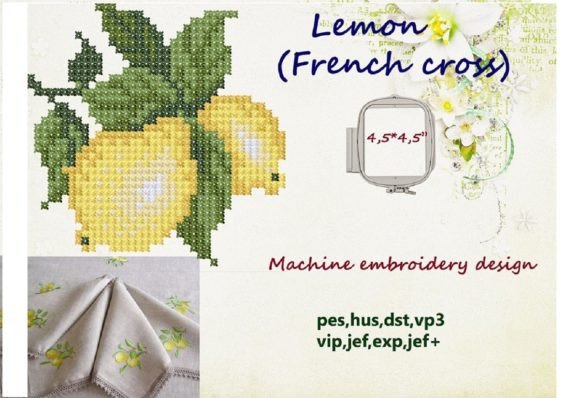
Lemon Cross Stitch: A Designer’s Review for Craft Fairs
As an embroidery designer who has spent countless weekends behind a booth table, I know that the difference between a browser and a buyer often comes down to visual impact. When I first loaded the Lemon Cross Stitch file into my digitizing software, my immediate impression was one of cheerful clarity. This is not just another fruit motif; it is a strategic asset for any handmade product line focused on home goods. The design utilizes a French cross stitch technique, which gives it a textured, handcrafted appearance even though it is produced by a machine. For those of us selling at local markets or running an online Etsy seller shop, this blend of traditional aesthetic and modern efficiency is exactly what we need.
First Impressions and Market Appeal
The vibe of this design is distinctly farmhouse meets modern rustic. It feels fresh, bright, and inviting. In the world of Food themed decor, lemons are perennial bestsellers because they symbolize cleanliness, freshness, and joy. When reviewing this machine embroidery design, I looked for boldness. Does it pop from three feet away? Yes. The simulated cross-stitch texture provides enough visual weight to stand out on white linens without looking heavy or dated. It strikes a balance between cute and elegant, making it versatile for a wide demographic of buyers, from young couples setting up their first home to seasoned collectors of kitchen textiles.
Strategic Product Placement for Maximum Sales
To maximize the potential of this digital embroidery file, we must consider where it performs best. Based on the description, this design shines on kitchen textiles. Here is how I would deploy it in a real-world craft fair scenario:
- Tea Towel Embroidery: This is the flagship product. A simple flour sack towel with a single lemon motif near the hem sells quickly. It is an impulse buy price point and demonstrates the design’s clarity perfectly.
- Apron Embroidery: Placing the design on the bib of a canvas apron creates a high-value item. It transforms a basic utility item into a giftable craft fair product.
- Tote Bag Design: A natural cotton tote with this motif appeals to the eco-conscious shopper. It serves as a walking advertisement for your brand.
- Embroidered Patch: If you offer customization, this design works well as an iron-on patch for denim jackets or canvas bags, expanding your reach beyond home decor.
While the design is beautiful, it is crucial to remember that context matters. On a busy patterned fabric, the details might get lost. I recommend sticking to solid, light-colored fabrics to let the yellow and green thread colors sing. This approach ensures that your finished product looks premium and professional.
Production Practicalities and Batch Efficiency
For small shop owners, time is money. One of the strongest aspects of this embroidery file is its repeatability. The French cross stitch technique, while visually complex, is typically optimized in machine files to reduce unnecessary jumps and trims. This means you can hoop multiple items and run them in batches without constant supervision. However, you must verify the specific technical details before starting production. Since the provided description does not list exact specifications, you must check the hoop size requirements and stitch count in your software.
Batch production is key to profitability at craft fairs. If you can embroider ten tea towels in the time it takes to do one complex jacket back, your profit margin increases significantly. This design appears to be sized appropriately for quick turnaround, making it ideal for restocking popular small shop product lines during peak seasons like spring and summer.
Careful-Use Notes and Technical Considerations
Even the best designs have limitations. As a designer, I must point out areas where caution is needed to maintain quality control. The simulated cross-stitch effect relies on precise stitch placement. If the stitch density is too high for the fabric, you may experience puckering. Conversely, if the fabric is too loose, the stitches may not cover the material adequately.
- Fabric Texture: Avoid highly textured towels where the "cross" effect might merge with the weave of the cloth. Smooth cotton or linen blends yield the crispest results.
- Dark Fabric: This design likely uses bright yellows and greens. On dark navy or black fabric, you may need an underlay or a backing patch to ensure the colors remain vibrant and do not look muddy.
- Curved Surfaces: While it works on caps, ensure your stabilizer is robust. Curved surfaces can distort the geometric precision of the cross-stitch look if not hooped tightly.
- Small Details: Do not shrink this design below its intended minimum size. Tiny cross-stitch elements can become indistinct blobs if reduced too much, losing the charm that makes them sellable.
Enhancing Visual Appeal and Brand Consistency
Using a cohesive design like Lemon Cross Stitch helps build brand recognition. When customers see the same high-quality motif on your napkins, pillows, and packaging, they perceive your brand as professional and curated. This consistency drives buyer engagement. Furthermore, this design photographs exceptionally well for online listings. The contrast between the yellow threads and white fabric creates a clean, bright image that stops the scroll on social media.
To leverage this, create a printable mockup or take high-resolution photos of your samples. Use these images not just for sales, but as design assets for your marketing materials. Show the design in situ—on a set table with fresh lemons nearby. This lifestyle presentation helps customers visualize the handmade product in their own homes, increasing the perceived value.
Final Designer Recommendations
Before you commit to a large production run, follow these essential steps to ensure success with this commercial embroidery asset:
- Test on Scrap Fabric: Always run a test stitch-out on the exact fabric you intend to sell. Check for tension issues and thread breaks.
- Check Thread Contrast: Ensure your yellow thread is bright enough to stand out against your chosen background. Matte threads often look more authentic for cross-stitch styles than shiny rayon.
- Review Spacing: Inspect the spacing between the simulated crosses. They should be distinct but not so far apart that the fabric shows through excessively.
- Confirm Licensing: Although this is a review, always double-check the license terms of your digital embroidery file. Ensure you have commercial rights to sell the finished physical items.
- Use the Right Stabilizer: For kitchen towels, a cut-away stabilizer might be too stiff. Test tear-away or wash-away options to maintain the soft drape of the textile.
In conclusion, Lemon Cross Stitch is a strong contender for any Embroidery business looking to expand its home decor line. It offers the perfect mix of visual appeal, production efficiency, and market demand. By paying attention to fabric choice and technical execution, you can turn this simple design into a staple bestseller at your next craft fair.