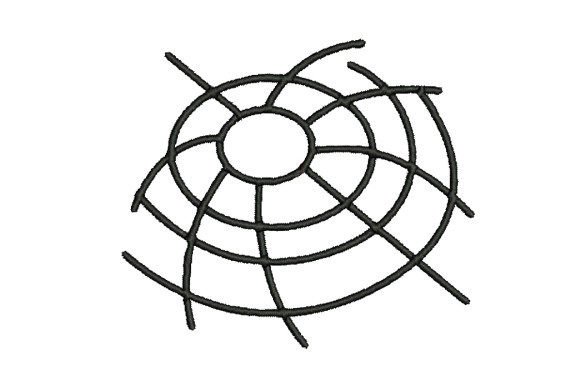
World Spider Web: A Designer’s Review for Brand Merch
As an embroidery designer who has spent years digitizing and reviewing files for commercial use, I approach every new machine embroidery design with a critical eye. It is not just about whether the art looks good on a screen; it is about how it translates to fabric, how it holds up in the wash, and most importantly, how it serves the brand identity of the small business owner using it. Today, I am taking a close look at World Spider Web, a unique piece from the Bugs category that promises to blend nature with global connectivity.
The concept is striking: a spider weaving a web in the shape of a globe. This is not your typical spooky Halloween motif. Instead, it represents the spider as a creator, using its web to build various works. For boutique owners, creative studios, and handmade brands, this imagery offers a sophisticated metaphor for networking, craftsmanship, and global reach. But does it work as a practical asset for small business merch? Let us dive into the details.
First Impressions and Visual Personality
When I first loaded the digital embroidery file for World Spider Web, my immediate impression was one of intricate elegance. The design feels both modern and classic, balancing the organic chaos of a spider web with the structured symmetry of a globe. It is decorative yet professional, avoiding the cartoonish trap that many insect-themed designs fall into.
This visual personality makes it versatile. It does not scream "costume party." Instead, it whispers "artisan skill." For a florist, a bakery, or a local café, this design could serve as a subtle nod to the interconnectedness of their community. It is bold enough to be noticed on a tote bag but refined enough to sit comfortably on a high-end apron without looking out of place. The aesthetic is premium, suggesting that the brand behind it values detail and quality.
Real-World Applications for Small Businesses
The true test of any embroidery file is its application. I evaluated World Spider Web across several common merchandise categories to see where it shines.
- Embroidered Patches: This is perhaps the strongest use case. The circular nature of the globe-web lends itself perfectly to a round patch. Applied to denim jackets, canvas bags, or even laptop sleeves, it acts as a distinctive badge of identity for creative professionals.
- Custom Apparel and Uniforms: For staff uniforms, particularly in creative industries like design studios or boutique retail, this design works well as a chest logo accent. It is small enough to be unobtrusive but detailed enough to spark conversation.
- Cap Embroidery: Placing this on the front of a cap requires careful scaling. The radial lines of the web can look fantastic on a curved surface if the digitizing handles the curvature well. It adds a touch of whimsy to otherwise standard headwear.
- Tote Bag Design: Canvas totes are a staple for Etsy sellers and craft fairs. World Spider Web provides a central focal point that elevates a simple bag into a branded statement piece. The contrast of thread against natural canvas creates a rustic, handmade appeal.
- Apron Embroidery: For bakers, baristas, or florists, an apron featuring this design suggests a mastery of craft. The spider as a weaver parallels the baker kneading dough or the florist arranging stems. It is a poetic fit for service-based businesses.
Technical Considerations and Production Notes
While the artistic merit is high, production realities must be addressed. As a designer, I always advise checking specific technical details before running a full batch. Since the product description notes that "each spider web is different," you must verify the specific stitch density and file format provided in your download.
Here are my practical notes for executing this design successfully:
- Test on Real Fabric: Never skip the sample stitch-out. Run the design on the exact fabric type you intend to use. Textured fabrics like terry cloth or heavy canvas may swallow fine details of the web.
- Check Hoop Size Compatibility: Confirm the required hoop size before purchasing. If the design is large, ensure your machine can handle it. If it is small, ensure your hoop allows for precise placement.
- Stabilizer Selection: Given the likely radial tension of a web design, using the correct stabilizer is crucial. A cut-away stabilizer is often best for garments that will be washed frequently, preventing puckering around the dense center of the globe.
- Thread Color Contrast: Test the design in black and white first. This helps you see if the lines of the web distinguish themselves from the background. High contrast is key for recognition at a distance.
- Scaling for Small Patches: If using this for tiny labels or small patches, ensure the inner details of the web do not merge. You may need to simplify the design or increase the size to maintain clarity.
Impact on Brand Identity and Customer Trust
Using a distinct design like World Spider Web does more than decorate a product; it builds brand identity. In a market saturated with generic logos, a custom embroidered element signals effort and authenticity. When customers see a well-executed embroidered patch or a neatly stitched cap, they associate that quality with the business itself.
For handmade product sellers, this design reinforces the narrative of creation. The spider is a builder, a weaver, a creator. This aligns perfectly with the values of artisans who take pride in their craft. It enhances visual consistency across your design assets, from your online printable mockup to the finished product in the customer's hands.
Moreover, it aids in buyer engagement. Unique merchandise becomes a conversation starter. A customer wearing a tote with this design is likely to receive compliments, which leads to organic word-of-mouth marketing for your brand. It transforms a simple item into a piece of wearable art.
Where to Use Caution
Despite its versatility, there are scenarios where World Spider Web might struggle. Avoid using it on dark uniforms if the thread colors do not offer sufficient contrast. Be cautious with very high stitch density areas on thin fabrics, as this can cause tearing or stiffness. Also, if the design includes tiny lettering or extremely fine outlines, it may not survive industrial washing cycles typically used for corporate uniforms. Always review the specific file details regarding commercial embroidery rights and technical specs before committing to large-scale production.
In conclusion, World Spider Web is a compelling addition to any embroidery designer’s library. It bridges the gap between whimsical nature imagery and professional branding. With proper testing and attention to thread colors and stabilization, it can become a signature element for your next collection of custom apparel or branded accessories.